Short Research Statement
I want to understand how optimization selects solutions in highly
overparameterized models, and how this selection gives rise to
generalization.
Much of the literature on generalization is split into frameworks that explain
particular phenomena in isolation but do not fit together into a coherent
account of modern machine learning. This includes perspectives based on
implicit bias toward low-norm solutions, interpolation-based explanations of
phenomena such as double descent, and views of generative modeling in which
structured errors are essential for good performance. Each of these captures
part of the picture, but none seems to explain the full range of behaviors
observed in overparameterized systems.
My goal is to mathematically characterize when and how generalization occurs
across different settings, and to develop frameworks that distinguish which
observed phenomena are genuine causes of generalization, which are
consequences of optimization, and which are different expressions of the same
underlying mechanism.
Ongoing Research
-
Towards a Causal Understanding of Low-Rank Structure and Generalization in Deep
Learning
Current literature often treats low effective rank and neural collapse as causes
of generalization. But this picture does not fit settings such as weight
interpolation, where effective rank can increase, neural collapse can break, and
generalization can still improve.
In a synthetic setting, I show that a tailored training regime can produce models with higher effective rank that consistently outperform fully converged neural networks with lower effective rank. This raises the question of whether low rank is truly causal for generalization, or whether it is only correlated with the mechanisms that matter.
My goal is to formalize this notion of simplicity and disentangle it from low effective rank, with the broader aim of identifying optimization mechanisms that favor generalizing solutions without directly constraining rank. -
Correcting the Null Hypothesis of AGN Light Curves using Generative Models
In astrophysics, hidden signals in highly noisy AGN (Active Galactic Nuclei)
light curves are often detected by assuming a red-noise model, proposing a
candidate signal, and then estimating how likely that signal is to arise as a
noise artifact by simulating from the assumed null model. If that assumption is
wrong, even within a particular family of objects, both detection quality and
statistical power can degrade substantially.
In this project, I instead learn the noise distribution directly from observations using continuous normalizing flows. The goal is not to generate the data itself, but to generate realistic noise under the null hypothesis.
I show that a naive conditional training regime underperforms for this task, and introduce a new objective that jointly supports generation and the broader conditional posterior. This improves performance to the point of matching the case where the correct noise model is known in advance.
Bio
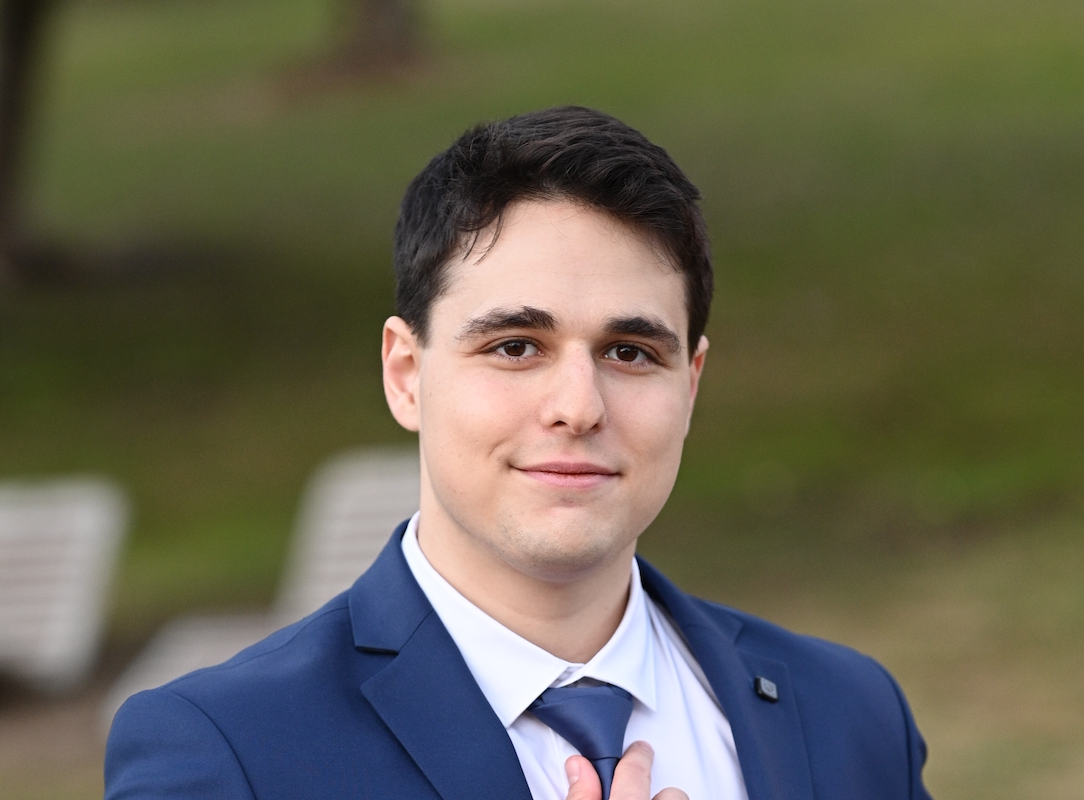
I am a PhD student in computer science at ISTA and an ELLIS scholar. I completed my BSc and MSc in computer science at the Technion, where I did my master's with Prof. Alex Bronstein on machine learning for scientific applications.
My earlier research focused on generative modeling and probabilistic inference in biology and physics. In particular, I worked on protein structure modeling under experimental constraints, as well as on learning and inference in settings with strong dependencies and non-i.i.d. sampling, where observations are correlated rather than independently drawn. These problems pushed me toward more fundamental questions about learning, especially in settings where standard assumptions break down and existing intuitions become less convincing.
Although my work so far has been largely applied, it made clear to me that I am more interested in the principles governing learning itself than in machine learning purely as a tool for scientific applications. My research direction is now firmly centered on foundational questions in modern machine learning, and I am looking for an environment where I can pursue them in close collaboration with researchers in the area.
Outside of research, I enjoy reading books, snowboarding, and surfing. If an activity comes with no risk of breaking a leg, it is probably not worth my time. Except for books. books are awesome.
Selected Publications
-
Representing local protein environments with machine learning force fields
Meital Bojan, Sanketh Vedula, Sai Advaith Maddipatla, Nadav Bojan Sellam,
Anar Rzayev, Federico Napoli, Paul Schanda, Alex M. Bronstein.
Published at ICLR 2026. -
Seek and You Shall Fold
Nadav Bojan Sellam*, Meital Bojan*, Paul Schanda, Alex M. Bronstein.
Presented at the Machine Learning in Structural Biology (MLSB) workshop at EUrIPS 2025 (European edition of NeurIPS). -
Inverse problems with experiment-guided AlphaFold
Sai Advaith Maddipatla*, Nadav Bojan Sellam*, Meital Bojan*,
Sanketh Vedula, Paul Schanda, Ailie Marx, Alex M. Bronstein.
Spotlight at the GEM workshop at ICLR 2025; accepted to ICML 2025. -
Generative modeling of protein ensembles guided by crystallographic electron
densities
Sai Advaith Maddipatla*, Nadav Bojan Sellam*, Sanketh Vedula,
Ailie Marx, Alex M. Bronstein.
Oral presentation at the Machine Learning in Structural Biology (MLSB) workshop at NeurIPS 2024.
* indicates equal contribution.